
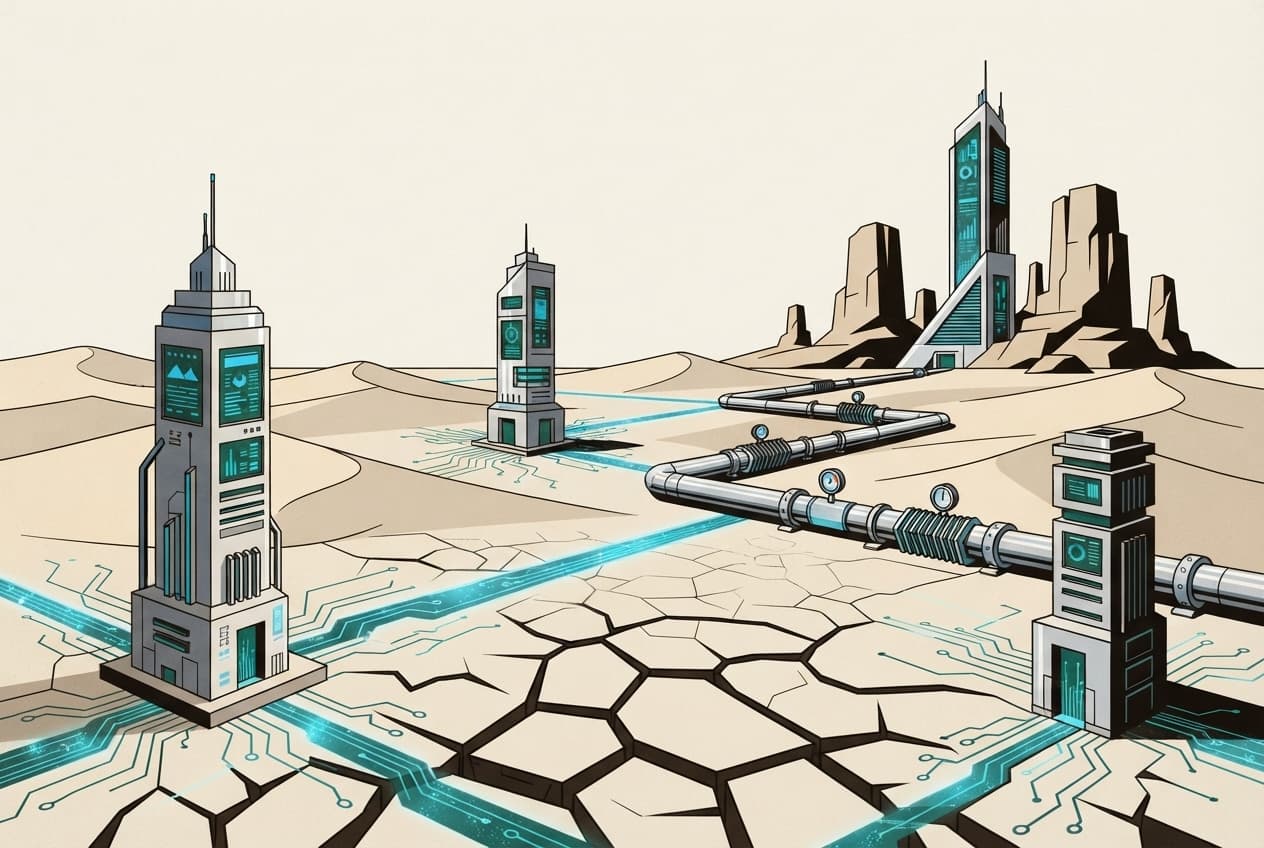
The report, Crosscurrents: Navigating the AI-Water-Energy Nexus, highlights that integrated planning and governance are essential to ensuring the technology advances sustainably without contributing to water scarcity.
"The extraordinary rise of artificial intelligence has brought with it a paradigm shift in both the nature of the global water crisis and our ability to address it," Sheikh Abdullah bin Zayed, Deputy Prime Minister and Minister of Foreign Affairs, said in the executive summary of the report.
EditorialAI works best when everyone is able to use it Sheikh Abdullah said that as water scarcity intensifies alongside the expansion of AI, governments and industry must manage water, energy and digital infrastructure as a single interconnected system.
The report maps water use across the AI value chain, including semiconductor manufacturing, electricity generation and cooling infrastructure, while also emphasising that indirect water use, particularly in power generation and chip production, often exceeds direct consumption at data centres themselves.
It added that policymakers have overlooked the implications of the effect of AI's rapid expansion on resources. Data centre water use is projected to about double by 2030, reaching 9.32 trillion litres.